The Mortgage Stress Test in 2026: What It Is and How to Pass It
- TrueNorthCalc Team
- Jun 19
- 4 min read
Why your bank qualifies you at a higher rate
If you have applied for a mortgage in Canada, you may have noticed the bank approved you as if your interest rate were higher than the one you were actually offered. That is the mortgage stress test at work. It is a federal rule designed to make sure borrowers can still afford their payments if interest rates rise, and it has a real effect on how much home you can buy.
How the stress test works
Federally regulated lenders must qualify you at the higher of two numbers: your contract rate plus two percent, or a minimum qualifying rate of 5.25%. So if your lender offers you 4.8%, you must prove you could handle payments at 6.8%, because 4.8 plus 2 is higher than 5.25. Your income, debts, and down payment are then run against this higher rate using standard debt-service limits. You still pay your real, lower rate once approved; the test only governs how much you are allowed to borrow.
A worked example
Consider a household that could, on paper, handle a $3,000 monthly mortgage payment. At a real rate of 4.8% over 25 years, $3,000 a month would support a mortgage of roughly $525,000. But the stress test makes them qualify at 6.8%, and at that higher rate the same $3,000 payment only supports about $435,000 — a reduction of around $90,000 in borrowing power. Nothing about their income or the home changed; the test simply reserves part of their capacity as a safety buffer. When rates are low the plus-two-percent rule bites hardest, and when rates are high the 5.25% floor matters less because contract rates already sit above it.
What it means for your budget
The practical result is that the stress test lowers your maximum purchase price compared with what your actual payment could support. This can feel frustrating, but it is also a built-in safety margin. If rates climb at renewal, you have already been qualified to handle a payment well above your current one. The gap between your qualifying payment and your real payment is your cushion.
Where the stress test came from
The current rules come from Canada's banking regulator, OSFI, and were expanded in 2018 to cover both insured and uninsured mortgages. The goal was to cool rapid price growth and reduce the risk of households becoming over-leveraged if rates rose — a risk that became very real when rates climbed sharply in 2022 and 2023. Because so many borrowers had been qualified at higher test rates, far fewer ran into trouble at renewal than otherwise would have. Whatever you think of the policy, the cushion it builds is genuine.
How to improve your approval
Because the test runs your numbers against debt-service ratios, the most effective ways to pass comfortably are to lower your other debts, increase your down payment, or raise your qualifying income. Paying off a car loan or a line of credit can free up a surprising amount of borrowing power, because those payments count against you. A larger down payment reduces the mortgage you need and can also remove default insurance once you cross twenty percent.
First-time buyers and the test
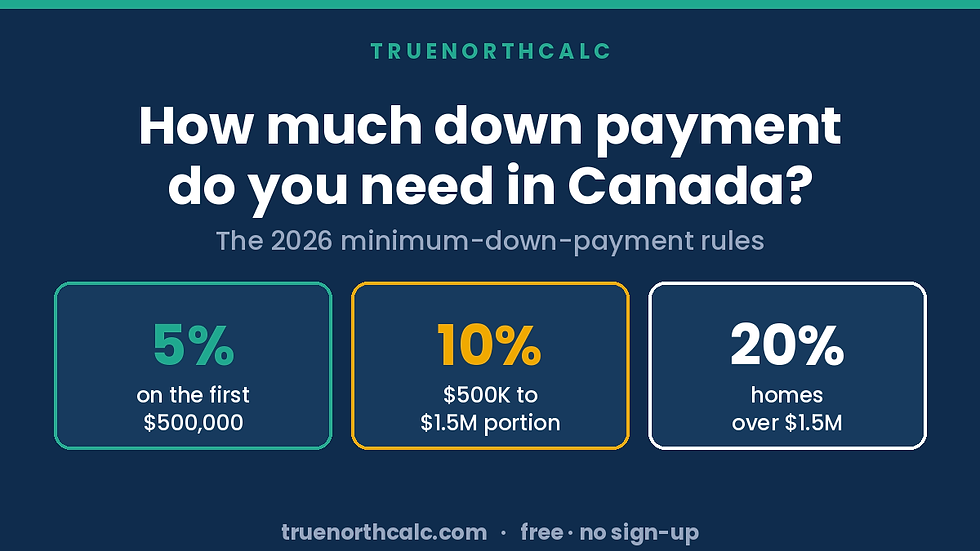
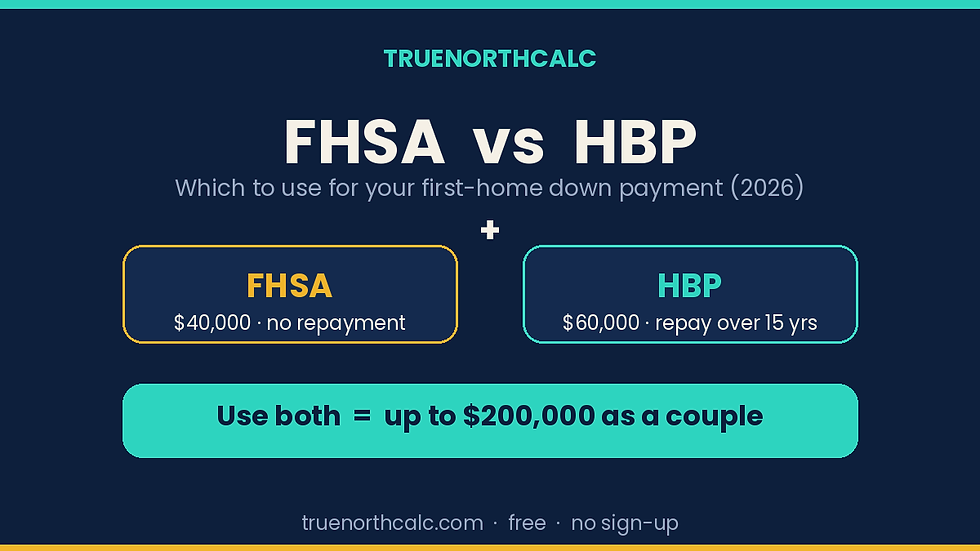
The stress test applies to first-time buyers the same way it applies to everyone else, but first-timers have tools that soften it. Putting registered savings toward a down payment through programs like the Home Buyers' Plan or the First Home Savings Account increases your down payment, which lowers the mortgage you need to qualify for. A co-signer with strong income can also help you clear the test, though they take on full legal responsibility for the loan. The affordability calculator lets you test how a larger down payment changes your qualifying price in seconds.
Frequently asked questions
Does the stress test apply to credit unions?
Provincially regulated lenders such as some credit unions are not always bound by the federal stress test, though many apply a similar standard voluntarily. The major banks, which are federally regulated, always apply it.
Does the test apply when I renew?
If you renew with your existing lender, the stress test usually does not apply. If you switch lenders at renewal, the new lender will generally re-qualify you, including the stress test. This is one reason some borrowers stay put at renewal.
Can I get around the stress test?
Not through a federally regulated bank — the test is mandatory there. Some provincially regulated credit unions have more flexibility, and private or alternative lenders may not apply it, but those routes often come with higher rates that can cost more than the test saves. For most buyers the smarter move is to pass it comfortably by reducing debts or increasing the down payment rather than seeking a lender that skips it.
How do I see my real maximum?
The home affordability calculator on this site applies the stress test for Canada automatically, qualifying you at the higher rate while showing your estimated payment at the actual rate. That lets you see both your borrowing limit and your true monthly cost side by side.
Try it yourself: the Home Affordability Calculator on TrueNorthCalc is free with no sign-up.
Comments